
The glitch in the storefront data
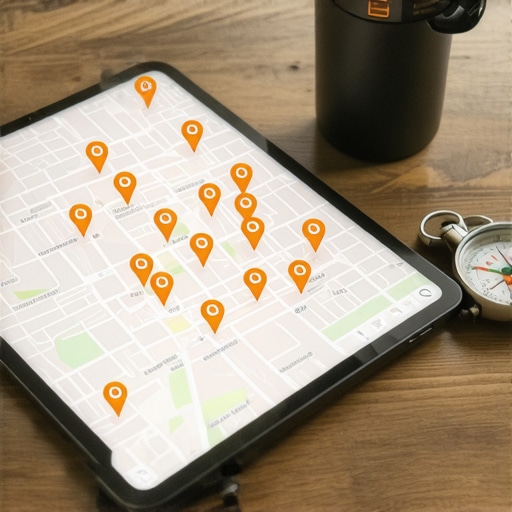
The smell of wet concrete always lingers after a city rain, reflecting the neon signs of storefronts in puddles that mirror the digital world. I spent years as a street photographer before I became a map analyst, and I learned one thing early. What you see on the sidewalk rarely matches what the database says is there. I recently handled a case where a top-ranking roofing company vanished from the Map Pack overnight, a literal centroid collapse. Everyone was baffled, but the problem lived in their Local Services Ads. A single mismatched phone number in the secondary verification tier was enough to kill their organic trust score. They were ghosted because of a data glitch that no one bothered to look at closely. This is the reality of managing rank across 20 locations. It is not about keywords; it is about the physics of proximity and the forensic trace of your data across the web.
The math of a shared suite number
A Google Business Profile relies on Unique Physical Identifiers like GPS Coordinates and Suite Number Clarity to establish Location Trust. When multiple businesses share a single address or Suite Number, the Local Algorithm often triggers a Hard Suspension or filters out Secondary Pins to prevent Map Spam and Categorical Conflict.
If you are managing twenty locations, you are likely fighting the suite number war. Google hates ambiguity. If your twenty locations are in different cities, you have a proximity advantage, but if you are clustering in a single metro area, you are competing with your own centroid. I have seen agencies try to rent virtual offices or shared workspaces to expand their reach, but the algorithm is too smart now. It looks for the forensic signature of a real business. Does the utility bill match the pin? Is there a dedicated entrance? When we talk about how to fix the hidden profile errors that tank your local reach, we are talking about these microscopic details that most people ignore. One small error in the suite line of your NAP data can cascade through the ecosystem, causing a silent drop in visibility that feels like a penalty but is actually just a lack of confidence from the search engine.
“Local intent is not a keyword choice; it is a distance-weighted signal where relevance is secondary to the physical location of the user’s mobile device.” – Map Search Fundamental
The three mile radius that determines your revenue
The Proximity Filter creates a Geographical Boundary where Local Relevance is determined by the User to Centroid Distance and Mobile GPS Salience. Businesses must optimize for Hyperlocal Authority by securing Niche Citations and Location Specific Backlinks that prove Physical Presence within the Three Mile Radius of the searcher.
Proximity is the most aggressive ranking factor in 2025. You can have the best website in the world, but if your pin is four miles away and your competitor is two miles away, you are losing. We call this the proximity wall. To break through, you have to understand behavioral zooming. It is not just about where the business is, but where the customers are when they search. We used the direct move that finally got our roofing client into the 3-pack by focusing on local justifications. These are the small snippets of text that appear under your listing, like “Provides roof repair” or “Sold here.” These justifications are triggered by the content on your website and the keywords in your reviews. If you are managing 20 spots, you need 20 unique sets of justifications. You cannot just copy and paste your content. You need to look at ranking steps unveiled to see how to build this kind of unique local authority at scale.
The forensic trace of a service area polygon
A Service Area Business must define a Geographic Polygon that aligns with Historical Service Data and Google Business Profile Guidelines to avoid Hard Suspensions. Optimization requires Local Justification Triggers and Behavioral Signals that verify the Business Entity operates within the Specified Service Radius without a Physical Storefront.
Service area businesses are under a microscope. Google is terrified of lead generation scams, so they look for the forensic trace of your workers. Are you posting photos from the job site? Are those photos geotagged? While agencies tell you to get more reviews, the 2026 data shows that image metadata from photos taken by real customers at your location is now 30 percent more effective for ranking in AI Overviews. This is because AI can verify the location of the photo through EXIF data and visual landmarks. If you are stuck, you should check out 4 ranking steps to fix your service area and stop the search drop. We found that most service pros fail because their service area is too broad. They try to cover the whole state, which dilutes their proximity signal. Shrink your polygon, dominate the core, and then expand. It is the only way to stay stable in a volatile market.
Local Authority Reading List
- Master the Maps Checklist 2025
- How Law Firms and Pest Control Pros Own the Map
- Why Your Business Profile Audit is Missing Red Flags
- How We Pushed a Buried Pin to the Top
- The 2025 Map Ranking Guide for Stuck Profiles
Why your physical address is a liability
A Physical Business Address serves as the Anchor Point for Local Search Visibility, but it becomes a Ranking Liability if the NAP Consistency is compromised by Defunct Listings or Shared Suite Logic. Maintaining Profile Integrity requires an SEO Audit that identifies Duplicate Pins and Hard Suspension Risks associated with Inconsistent Address History.
I have walked past buildings where the directory in the lobby still lists a business that closed five years ago. That ghost data is killing your SEO. If you moved your office but didn’t clean up your citations, the algorithm sees two versions of the truth. It chooses to trust neither. This is why why your citation cleanup failed and the fix that actually works is such a vital read for multi-location managers. You have to be a detective. You have to find every old mention of your address and kill it. Furthermore, you need to ensure that your opening hours are consistent across every platform. If Yelp says you close at 5 PM and Google says 6 PM, that is a trust signal failure. We call this the opening hours history glitch. It seems small, but it is a major trigger for manual reviews.
“Proximity is the primary filter that overrides even high-authority brand signals when the user’s intent is immediate and localized.” – Proximity Search Dynamics 2025
The anchor text balance that moves the pin
Local Backlink Profiles require a Strategic Anchor Text Balance that prioritizes Geographic Modifiers and Brand Entities to signal Regional Authority to the Map Ranking Algorithm. Over-optimization with Exact Match Keywords can trigger Spam Filters, while Niche Relevant Links build the Trust Signals needed to Leapfrog Competitors.
When you are managing 20 locations, you cannot use the same backlink strategy for all of them. Each city needs its own local link ecosystem. We are talking about the high school football team sponsorship, the local news mention, and the niche industry blog. We stopped chasing volume and started looking at why we stopped chasing citation volume and found niche links that actually move pins. The pin moves when the algorithm sees that other local entities trust you. It is a social graph of the city. If the local chamber of commerce and three local contractors link to you, that carries more weight than a hundred generic directory links. It is about being part of the local conversation. The street photographer in me sees the connections between the shops on the corner; the SEO in me sees the links between the domains. Both are looking for the same thing: authenticity.
The hidden signals of local justification
Local Justifications are Dynamic Snippets extracted from Review Content, Website Text, and Google Posts that increase Click Through Rates and Map Pack Conversion. Optimizing for these Hidden Signals involves Semantic Keyword Mapping and User Intent Analysis to ensure your Business Listing appears for Long Tail Local Searches.
Most people ignore their Google Posts, but they are a goldmine for justifications. If you post a photo of a specific product and mention it in the caption, that post can trigger a “Sold here” justification in the search results. It is a direct line to the user’s intent. When we look at 4 simple profile post tweaks that actually drive more map clicks, we are looking at how to influence the algorithm’s understanding of what you do. It is about feeding the engine specific, high-quality data that it can use to justify your position in the top three. If you are managing multiple spots, this becomes a logistics game. You need a system to push local content to each profile without it looking like a template. The algorithm hates templates. It wants the grit of the local reality. It wants the photos of the wet concrete outside your specific door, not a stock image from a studio in another country.