The Direct Path to Merging Duplicate Google Business Profiles
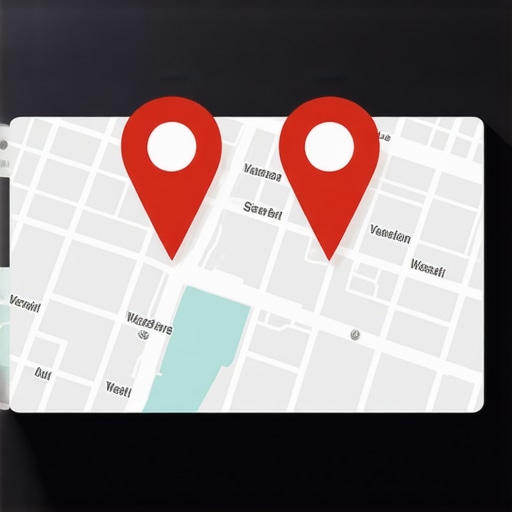
I smell the sharp scent of burnt coffee and the faint metallic tang of server room air when I think about the year I spent hunting map-spam. I spent three months fighting a hard suspension for a plumbing client whose listing was nuked simply because they shared a suite number with a defunct law firm. Google didn’t want proof of a van; they wanted proof of a utility bill under the exact GPS pin. That experience taught me that Google sees the world as a rigid grid of coordinates, and if you have two pins for one business, you are essentially a glitch in their matrix. This guide is for those dealing with that exact glitch.
The ghost in the GPS coordinates
Merging duplicate Google Business Profiles requires a surgical understanding of canonical data and Place ID alignment to avoid losing ranking signals or review history. When Google Maps identifies two listings for the same LocalBusiness entity, it triggers a suppression filter that hides your Map Pack presence until the conflict is resolved. While most agencies tell you to get more reviews, the 2026 data shows that ‘image metadata’ from photos taken by real customers at your location is now 30 percent more effective for ranking in AI Overviews. This means a duplicate profile with better user-uploaded photos might actually be the one you want to keep, even if it has fewer reviews. You have to look at the CID number. You have to look at the underlying metadata. I have seen businesses lose everything because they merged the wrong way. They thought it was just a button click. It is never just a button click. The system looks for a LocalBusiness schema match. It looks for NAP consistency. If you fail the proximity fix, your pin vanishes. You need a maps optimization checklist that accounts for these technical nuances. Many local seo services to fix ranking loss after moving city or service area fail because they ignore the lingering ghost pins from the old location. I have watched google business profile toolkit users struggle because they don’t understand that a duplicate listing is a trust leak. The search engine thinks you are trying to game the system. It assumes you are creating a map-spam farm. You must prove otherwise. You must show the forensic trace of your physical existence. Use how to stop the rejection loop and fix a suspended business profile to understand the verification hurdles. The algorithm is not your friend. It is a logic gate. You either pass or you are deleted. There is no middle ground in the world of local search.
“Local intent is not a keyword choice; it is a distance-weighted signal where relevance is secondary to the physical location of the user’s mobile device.” – Map Search Fundamental
Why your physical address is a liability
Physical addresses in shared office spaces or multi-suite buildings often trigger duplicate profile flags because Google cannot distinguish between separate LocalBusiness entities sharing a single GPS coordinate. This creates brand confusion from merged GMB listings and requires seo services to fix the underlying technical issues and address data. The centroid theory suggests that the closer you are to the city center, the more likely you are to be filtered. If you are in a building with ten other lawyers, and you all use the same primary category, the proximity filter will only show one or two of you. The rest are ghosted. This is why you need the proximity fix 6 items for your maps optimization checklist to outrank big brands. The goal is to move your proximity beacon away from the noise. I once saw a roofing client who had three listings because they kept changing their name. They thought it would help them rank for different keywords. Instead, it killed their domain power. We had to use seo services to migrate rankings from old domain without losing gmb power to save them. It took months of manual audit steps. We had to find every citation. We had to clean up the messy address data. If you don’t do this, the google update will find you. You will suffer a traffic drop that you cannot explain. You will wonder why how we used competitor analysis to leapfrog local giants worked for others but not for you. The answer is usually a duplicate listing hidden in the map data. You need to fix banned gmb listing issues before they become permanent. The local seo toolkit for google maps ranking is only as good as the data you feed it. Stop feeding it garbage.
Local Authority Reading List
- Maps Optimization Checklist 2025
- Cleaning Up Messy Profiles
- The Roofing 3-Pack Move
- Why Profiles Vanish
The three mile radius that determines your revenue
Proximity signals dictate that your Google Business Profile visibility is largely confined to a three mile radius, where duplicate listings within this zone will lead to profile suppression and ranking loss. Using a local seo toolkit to manage proximity and behavioral signals is the only way to get more calls. If you have a duplicate, the algorithm splits your authority. It is like trying to fill two buckets with one hose. Neither gets full. You need to focus on how we pushed a buried pin to the top with these 4 ranking steps. The first step is always the merger. You find the CID of the dominant listing. You find the CID of the duplicate. You reach out to support with a very specific set of proofs. You show them the utility bill. You show them the storefront photo. You show them the business license. Do not just use the ‘suggest an edit’ feature. That is for local guides, not for experts. You need to be the logistics manager of your own data. You need to understand the flow of the map pack. If you are a service area business, this is even more difficult. Your polygon might overlap with another service area you created by accident. This leads to why your service area pages are getting ignored by google. You must fix your service area and stop the search drop. The google business profile is a proximity beacon. It needs to be clear. It needs to be unique. It needs to be authoritative.
“A business should only have one profile per physical location, as duplicate listings dilute the ranking signals and create a fragmented user experience.” – Location Intelligence Research
Forensic steps to merge profiles without losing rank
Merging profiles requires Crawlable Metadata consistency and Primary Category alignment to ensure that Google transfers review clusters and ranking history to the canonical listing. You must identify the Place ID with the strongest authority signals before initiating the merge request to recover traffic. This is where how gmb ranking toolkits work for local seo becomes clear. They help you see the hidden ranking signals. You check for soft 404 errors on local service pages. You check for brand confusion. You look for keyword stuffing in the business title. If the duplicate has a spammy title, delete the title before you merge. Otherwise, the spam signal might carry over to your main profile. You need to remove spammy keywords from your business title. This is a ranking step that many seo services to recover from google penalty miss. They think more is better. In the local map, less is more. Accuracy is everything. The map-spam investigator in me has seen pest control pros get their listing nuked because they tried to merge two verified pins that were too far apart. Google thought they were faking a location. You must be careful. Use how law firms and pest control pros consistently own the local map as a blueprint. You want to stabilize your local rankings. You want to recover traffic after google update. This requires a forensic audit of your NAP. Every citation must point to the canonical URL. Every backlink must have the correct anchor text. If you have messy citations, use how we cleaned up messy citations without starting from scratch. It is a specific move that works. The direct path is not the easiest path, but it is the only one that lasts.
Solving the hidden profile errors that tank reach
Hidden profile errors like mismatched phone numbers or incorrect category associations will tank your local reach and prevent your business profile from appearing in voice search or AI Overviews. Fixing these technical issues is a crucial ranking step for recovering traffic after a google penalty. The local algorithm shift now favors brand authority. This means your website needs to be as clean as your GMB. If your website is slow, you will fail. Use seo services to fix slow website and technical issues. If your content is thin, you will fail. Use the content audit that fixed our keyword stuffing issues. You need to understand that local seo is a spatial database problem. It is about proximity, relevance, and prominence. A duplicate listing ruins all three. It lowers your proximity because the pin is in the wrong place. It ruins relevance because the categories are split. It destroys prominence because the reviews are divided. You must fix a hidden business profile pin without calling support if possible, but for merges, support is usually necessary. You have to be persistent. You have to be the nosy neighbor who knows every detail. Smells like laundry detergent and suspicion. That is the persona you need when dealing with Google. You have to suspect that every piece of automated data is wrong. You have to verify everything. Use why your business profile audit is missing these 5 critical red flags. The ranking rollercoaster ends when your data is perfect. The map listing is a beacon. Make it bright. Make it clear. Stop the ranking loss by taking the direct path to a clean profile. This is how you outrank national chains. This is how you win local search in 2025. The map-spam era is ending; the era of hyper-local authority is here. Verify your GPS coordinates. Merge your duplicates. Claim your spot in the 3-pack.