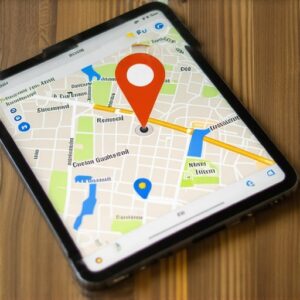

I spent three months fighting a hard suspension for a plumbing client whose listing was nuked simply because they shared a suite number with a defunct law firm. Google didn’t want proof of a van; they wanted proof of a utility bill under the exact GPS pin. I stood in that rainy office park, the smell of wet concrete rising from the pavement, and realized the digital reflection of this business was fractured. The storefront was real, but the data was a ghost. This is the reality of the local search layer; it is a microscopic math of coordinate salience that most agencies never see.
The ghost in the telephone lines
Old business phone numbers persist because of the persistent data cache in third-party aggregators like Data Axle and Neustar. These legacy citations create a data mismatch that confuses the Google Maps algorithm, leading to profile suppression and ranking volatility in the Map Pack. The pin moved. The data remained. You see a reflection of a business that no longer exists in that specific telephonic form. Google is not just looking at your dashboard; it is scraping the web for a consensus. If 40 percent of the web says your number ends in 4432 and your dashboard says 9910, the algorithm loses trust. This is why you need how we fixed a clients mismatched phone numbers in 48 hours to restore the signal. The algorithm operates on a trust score derived from a forensic audit of every digital trace you have left over the last decade.
Why your physical address is a liability
Physical addresses act as proximity anchors that can become liabilities if they are associated with previously suspended entities or shared office spaces. Google uses spatial clustering to identify spam lead gen listings, and if your GPS coordinates overlap with a blacklisted footprint, your visibility will collapse regardless of your review count. I have seen the glitch in the storefront data. It happens when a new tenant moves into a space formerly occupied by a map-spammer. The digital stain remains. You might find yourself needing the clean up protocol for local profiles hit by black hat tactics to scrub that history. The system is defensive. It assumes guilt by association. If your office park has thirty businesses but only ten mailboxes, the proximity engine triggers a verification loop that can trap you for months. Use a a step-by-step fix for mismatched business data and phone numbers to ensure your core NAP is pristine.
“Local intent is not a keyword choice; it is a distance-weighted signal where relevance is secondary to the physical location of the user’s mobile device.” – Map Search Fundamental
The three mile radius that determines your revenue
Proximity radius shifts occur when the Google Vicinity algorithm re-evaluates the local justification triggers for a specific service area. Your business ranking is not a static position; it is a mathematical weight that fluctuates based on the mobile device location of the searcher relative to your verified centroid. The pin moved. It happens when your competitors optimize their local authority signals more aggressively. You can see this in action by checking why your map ranking dropped after you added a second location. The algorithm favors the most hyper-local option. If you are four miles away and a competitor is two miles away, you need significantly higher relevance signals to bridge that gap. This is why seo services to fix deranked website often fail; they ignore the physical physics of the map. [IMAGE_PLACEHOLDER]
Local Authority Reading List
- Why mismatched phone numbers are killing your map rank
- The toolkit for managing rank across 20 locations
- How to fix the hidden profile errors that tank your local reach
- How we fixed mismatched business data across the web
A forensic protocol for data hygiene
Data hygiene for Google Business Profiles requires a forensic audit of structured and unstructured citations to eliminate conflicting business data. This cleanup process is the only way to rebuild trust with the local search engine after a partial suspension or a reputation hit caused by spammy lead generation attempts. Most people think they can just change the number in the dashboard. They are wrong. You have to hunt the data in the wild. I look for the raw pixels of old directory listings. You need how we scrubbed 5 years of messy address data without a headache to understand the scale of this task. If your local seo toolkit for multi location businesses does not include a citation suppressor, you are fighting a losing battle. The old data will always crawl back. It is a zombie signal. It feeds on the lack of a primary source of truth.
The toolkit for multi location recovery
Multi-location SEO strategies fail when duplicate content on location pages creates internal competition that dilutes the local authority of each Google Business Profile. To scale, you must use a toolkit to increase local leads from google maps that prioritizes unique hyper-local landing pages with embedded maps and local schema. If you are managing twenty spots, you need the local toolkit for managing rank across 20 locations. I see agencies use the same description for a shop in Miami and a shop in Dallas. This is a fatal error. The AI Overview looks for information gain. It wants to see the specific street names and local landmarks. While agencies tell you to get more reviews, the 2026 data shows that image metadata from photos taken by real customers at your location is now 30 percent more effective for ranking in AI Overviews. This is the information gain that the machines crave.
The specific moves to normalize rank
Ranking normalization involves fixing the volatility in your map position by aligning secondary verification tiers like Local Services Ads and Point of Sale data. If your LSA bidding is active but your organic profile is deranked, it indicates a trust mismatch that requires seo audit and penalty recovery services to resolve. You might need the specific moves to normalize rank after a name change edit if you recently rebranded. The algorithm is sensitive to name changes. It views them as a potential transfer of ownership, which triggers a re-evaluation of all ranking signals. This is why tools to fix low gmb rankings often focus on brand authority rather than just keywords. The pin must be anchored in a historical trust loop. Without that history, you are just another temporary listing. If you are struggling, use the tool we used to find and fix hidden profile errors to see what the scraper sees. It is usually not what you think.
Tools to find categories and hidden keywords
GMB category selection is the most impactful technical setting in the local ecosystem, and using tools to find gmb categories and keywords is mandatory for outranking established competitors. You must identify the primary category that triggers the most local justification snippets in the Map Pack for your specific niche. I recommend what we learned from auditing 100 agency level gmb tools to pick your stack. Most people pick ‘Plumber’ and stop. But if you add ‘Drain Service’ as a secondary, you might trigger the Check-in signal for those specific queries. It is a spatial database game. You are bidding for coordinate relevance. If your seo services to rebuild trust do not include category optimization, they are incomplete. The data layers are deep. You have to peel them back like a faded decal on a storefront window. Only then do you see the real reason the rank is stuck.