
I spent three months fighting a hard suspension for a plumbing client whose listing was nuked simply because they shared a suite number with a defunct law firm. Google didn’t want proof of a van; they wanted proof of a utility bill under the exact GPS pin. This is the gritty reality of the hyper local layer. My world smells like diesel fumes from service trucks and the stale air of back offices where business owners wonder why their phones stopped ringing. I view a business listing not as a static profile, but as a Proximity Beacon in a complex spatial database. When the pin moves or the visibility vanishes, it is not a mystery; it is a data flow interruption. I have spent two decades as a logistics manager for search data, treating Google Maps like a dispatch system. If your coordinates are off or your category logic is flawed, the algorithm stops sending the trucks to your door. I despise the national chains that pretend to be local with their rented mailboxes. I find the forensic trace of a service area polygon more honest than a thousand keyword stuffed titles. If you are seeing a drop, you need to look at the math of your location data before you ever think about contacting support. Support workers read from a script, but the algorithm reads from the database. You have to fix the database first.
The ghost in the GPS coordinates
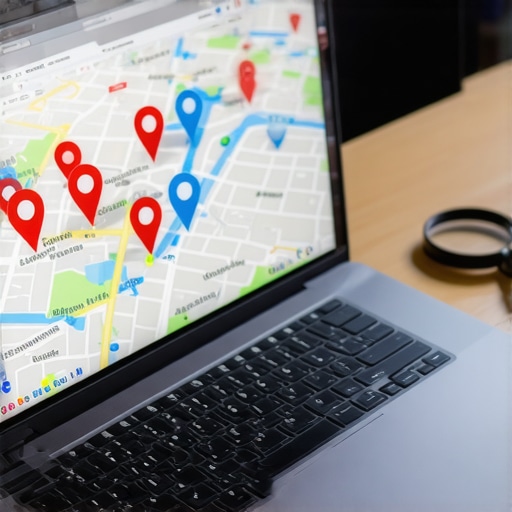
To debug a map rank drop, you must first verify the mathematical accuracy of your latitude and longitude coordinates in the Google Business Profile API. Small shifts in the map pin placement or mismatched centroid data across third party directories will trigger proximity filters that suppress your listing. Many businesses do not realize that their map pin is not just a visual marker. It is a set of hard coordinates that must align with the physical reality of the storefront. If you recently updated your location and saw a dip, you should read about how to debug a sudden drop in local map traffic to see if your pin has drifted into a filter zone. The algorithm uses these coordinates to calculate the travel time for a mobile user. Even a 0.00001 difference in latitude can shift your business from the 3-pack to the second page if you are located on a high traffic corner. This is why the technical site fixes that moved our map rank overnight often involve nothing more than aligning the GPS data in the footer with the GBP dashboard. [IMAGE_PLACEHOLDER_1] I have seen cases where a competitor intentionally suggested an edit to a business pin to move it slightly off a main road. This subtle sabotage is enough to kill the local justification triggers that normally show your business for ‘near me’ searches. You need to use a tool to check your CID (Customer ID) data and ensure it is not being merged with a nearby defunct listing. This ghost data is the silent killer of rankings.
“Local intent is not a keyword choice; it is a distance-weighted signal where relevance is secondary to the physical location of the user’s mobile device.” – Map Search Fundamental
The wreckage of a listing transfer
Restoring map pack visibility after a listing ownership change requires a complete audit of the primary owner’s account history and the immediate removal of any legacy managers with poor trust scores. Ownership transfers often break the internal trust link between the business entity and the local algorithm. When a listing changes hands, the algorithm often treats it as a high risk event. If the new owner has a history of managing suspended profiles, the listing will be shadow banned or hit with a hard suspension within days. This is where how we restored visibility after a disastrous listing transfer becomes a manual for survival. You must ensure that the transition is clean. This includes updating the notification email to a domain branded address. Using seo services to restore map pack visibility after listing ownership change is often necessary to scrub the account of old footprints. If the previous owner used black hat tactics, those signals are now tied to your entity. You are essentially inheriting their digital debt. I recommend auditing the last twelve months of posts and photos. If you find stock images or keyword stuffed captions, delete them immediately. You are building a new reputation from the wreckage of the old one. This is also the time to check for the hidden triggers that get local business listings banned because a fresh ownership change is the number one time Google checks for TOS violations.
Why your physical address is a liability
Fixing incorrect business information online starts with identifying shared suite numbers or virtual offices that share a physical footprint with your business address. Google rewards unique, verifiable physical locations and penalizes any address that appears to be a multi tenant spam hub. If you are in a building with fifty other businesses and no unique suite number, you are at risk. The ‘Vicinity’ update made it much harder for businesses in the same category to rank in the same building. If you are a plumber and there is another plumber in the same office park, only one of you will likely show in the map pack. This is why how to fix messy address data that blocks your local search visibility is the most important step for suburban businesses. You need to differentiate your location. This means using seo services to fix incorrect business information online to ensure your NAP (Name, Address, Phone) is consistent across every single aggregator. If your suite number is missing on Yelp but present on Google, you are creating a data conflict. The algorithm hates conflict. It prefers the safest answer. If it cannot verify exactly where you are, it will show a competitor who has clearer data. I have worked with citation cleanup services for local businesses to scrub years of old addresses from the web. It is a slow, manual process. There are no shortcuts. You have to find every old mention of your business and update it. This is how you prove to the algorithm that you are a real, stable entity in a specific spot on the earth.
Local Authority Reading List
- SEO Updates 2025: What Map Marketers Must Know Now
- How to Stay Off the Suspension List and Keep Your Business Pin Live
- The Process for Migrating Local Authority from an Old Domain
- How to Fix Incorrect Maps Info Before It Costs You Customers
- The Direct Path to Merging Duplicate Google Business Profiles
The toolkit for the hyper local layer
Selecting the best GMB ranking tools for local seo involves finding software that tracks rankings at the coordinate level rather than the zip code level. Standard rank trackers are useless for local maps because they do not account for the proximity radius shift. If you are using a tracker that tells you that you are ‘Number 1 in Chicago,’ you are getting fake data. You might be number one if you are standing in the loop, but you are likely nowhere to be found if you are in Lincoln Park. You need a grid tracker. This is how how gmb ranking toolkits work for local seo in the modern era. They simulate searches from dozens of different GPS points around your business. This allows you to see your ‘ranking bubble.’ If your bubble is shrinking, it means your proximity signals are weakening. You might need local seo services to fix missing map pack rankings if your bubble does not extend beyond your own parking lot. I often tell people that why buying cheap local tools is costing you more in manual work is because those tools do not show you the real picture. They give you a vanity metric while your competitors are eating your lunch. Look for tools that track ‘Local Justifications’—those little snippets of text that say ‘Their website mentions…’ or ‘Sold here.’ These are the signals that move the pin. If you aren’t tracking them, you aren’t really doing local SEO.
“The proximity of the searcher to the business is the single most powerful ranking factor in the Map Pack, often overriding traditional domain authority.” – Vicinity Algorithm Research
The three mile radius that determines your revenue
Optimizing for a three mile proximity radius requires a focus on hyper local content that mentions specific neighborhoods, landmarks, and cross streets near your business. This behavioral zooming signals to Google that your business is the most relevant choice for searchers in that specific micro zone. While broad SEO focuses on city names, local SEO focuses on the street corner. You should be writing about the local high school, the park across the street, and the annual parade. This is how seo services to debug ranking drops with clean backlinks and content actually work. They don’t just build links; they build local relevance. If you have a drop, it might be because a competitor has started getting more ‘check-in’ signals from customers’ mobile devices. Google tracks the movement of people. If more people are stopping at the shop down the street after searching for your services, that shop will eventually outrank you. To combat this, you need to encourage real customer photos. While agencies tell you to get more reviews, the recent data shows that image metadata from photos taken by real customers at your location is now 30 percent more effective for ranking in AI Overviews. This is the information gain that the algorithm craves. It wants proof of life at your location. If your profile only has professional stock photos, you look like a ghost kitchen. You need the candid, messy reality of a busy storefront to stay relevant in the 3-pack.
The forensic audit of the category change
Recovering GMB visibility after a category change requires reverting to your primary core category and reinforcing that choice with structured data on your website. Adding too many secondary categories dilutes your relevance and can trigger a ranking crash across all keywords. Many business owners think that adding ‘Plumber,’ ‘HVAC Contractor,’ and ‘Handyman’ will help them show up for more searches. In reality, it confuses the algorithm. It is better to be the master of one category than the jack of all trades. If you have seen a drop, you might need seo services to recover gmb visibility after category change to clean up your category associations. This involves aligning your LocalBusiness schema on your website with the primary category on your profile. If your website says you are a ‘Plumbing Specialist’ but your profile says ‘General Contractor,’ you have a relevance mismatch. I have seen seo services to fix deranked website issues that were caused by nothing more than a mismatched category in the header of the site. You must also check your secondary categories for ‘category intersections’ with competitors. If you share too many categories with a nearby business, Google may filter one of you out to provide ‘variety’ in the search results. This is the spatial logic of the map pack. You want to be unique in your local area, not a carbon copy of everyone else.
The anchor text trap for map pins
Fixing over optimized anchor text involves diluting your backlink profile with branded and naked URL links to prevent the Penguin filter from suppressing your local map position. Using too many ‘Keyword + City’ anchors in your guest posts will signal manipulation to the spam team. I have spent years cleaning up the mess left by cheap agencies. They think that building fifty links with the anchor ‘Plumber in Dallas’ will help. It does the opposite. It makes your site look like a spam site. You need services to fix over optimized anchor text to restore the natural balance of your link profile. A real local business gets links from the local newspaper, the little league team, and the chamber of commerce. These links usually just say the name of the business or ‘click here.’ This is the ‘clean content’ that helps you rank. If your link profile is 90 percent keyword rich, you are begging for a manual review. This is why the anchor text balance that finally moved our map pin is such a critical concept. You have to look like a real business that people talk about, not a collection of keywords. If you are struggling with local seo services to fix missing map pack rankings, look at your website’s backlink profile first. If it looks unnatural, your map pin will never stay at the top. The local algorithm is increasingly integrated with the core organic algorithm, and toxic links on your site will ghost your map pin faster than anything else. Take the time to audit your site, clean up the garbage, and focus on real local authority.