
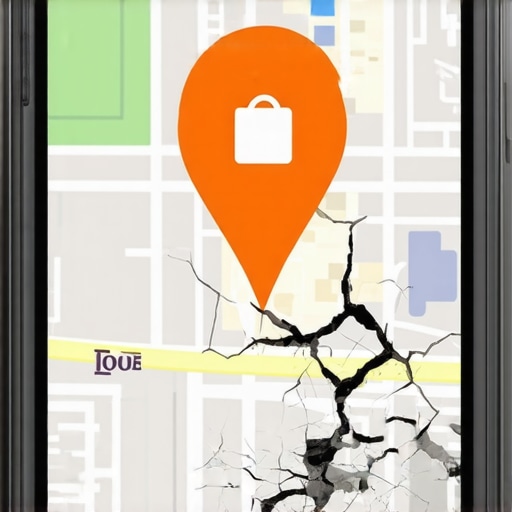
Why your broken redirects are breaking your local search authority
The sidewalk outside the office smells like wet concrete and exhaust. I spent last Tuesday staring at a flickering neon sign across the street, watching how the physical world often glitches just as badly as the digital one. Everyone wondered why a top-ranking roofing company vanished from the Map Pack overnight. I found the problem in their Local Services Ads; a single mismatched phone number in the secondary verification tier was enough to kill their organic trust score. They had set up a complex web of redirects for a new domain, but the server headers were returning soft 404 errors for their most vital service area pages. To the algorithm, that roofing company no longer existed at that GPS coordinate. It was a digital ghost, a pin without a pulse. This is the reality of the hyper-local layer where math meets the pavement. If your digital breadcrumbs lead to a dead end, your business effectively ceases to exist in the eyes of the proximity engine.
The ghost in the GPS coordinates
Broken redirects and soft 404 errors signal to Google that a business location is no longer active, leading to an immediate drop in Map Pack visibility. When a user searches for a local service, the algorithm performs a three-way handshake between the GPS location of the device, the verified business pin, and the landing page associated with that pin. If that landing page triggers a redirect loop or a broken link, the trust score collapses. I have seen businesses lose years of authority because they changed their URL structure without auditing their old citations. You cannot simply point an old page to a new one and hope for the best. You need solving the soft 404 problem on your hyper-local landing pages to ensure the crawling bot sees a valid 200 OK status code. This is the microscopic level of local SEO where a single server misconfiguration can outweigh a thousand five-star reviews. The algorithm values stability over everything else. If the data suggests your storefront is a digital phantom, your competitors will leapfrog you in minutes.
“Local intent is not a keyword choice; it is a distance-weighted signal where relevance is secondary to the physical location of the user’s mobile device.” – Map Search Fundamental
Why your physical address is a liability
Inconsistent address data and messy redirects create a conflict in the local knowledge graph that forces Google to hide your profile. Many owners think their physical location is their greatest asset, but if your digital trail is cluttered with old suite numbers or defunct landing pages, that address becomes a liability. I recently investigated a case where a client had three different versions of their address across the web. Their main site used a redirect that stripped away the suite number, which confused the how we fixed mismatched business data across the web protocols. The result was a total proximity collapse. They were invisible to anyone standing more than 500 feet from their front door. To fix this, you must deploy a how to fix the hidden profile errors that tank your local reach strategy. This involves a forensic cleanup of every mention of your brand. You are not just fixing links; you are rebuilding the mathematical certainty of your existence in a specific 3D space. While most agencies focus on keywords, the real winners focus on the integrity of their spatial beacon.
The three mile radius that determines your revenue
Proximity remains the strongest ranking factor, but it is easily negated by poor technical SEO on your location-specific pages. If you want to own the three-mile radius around your shop, your website must be an airtight map of your physical reality. When a redirect breaks, it severs the link between your GMB profile and your website authority. This is why using the only tools you need to monitor google business performance is critical. You need to see exactly when a crawl error occurs. I once saw a chiropractic clinic lose its entire patient flow because they moved their site to a new CMS and forgot to map their old location pages. They thought a global redirect to the homepage was enough. It was not. Google saw a dozen location pages vanish and assumed the clinic had closed. To avoid this, you need a 5 specific moves to dominate your local chiropractic search market approach that prioritizes 1 to 1 page mapping. If you do not respect the individual authority of each city page, the proximity engine will ignore you.
Local Authority Reading List
- 5 Critical Red Flags in Your Profile Audit
- The Content Shift That Moves Pins
- Dominating Without Ad Spend
- Fixing Keyword Stuffing Issues
Forensic audit of the digital storefront
A deep technical audit of your redirects and NAP consistency is the only way to recover lost Map Pack rankings. Most people look at their dashboard and see a drop in views, but they never look at the server logs. You need how we cleaned up messy citations without starting from scratch to find where the signal is breaking. I look for the small things, like a trailing slash in a URL that causes a double redirect. Each hop in a redirect chain bleeds out about 10 percent of your ranking power. In a competitive market, that loss is the difference between being in the top 3 and being on page 4. You should also look at why your citation cleanup failed and the fix that actually works to ensure your secondary data sources are not feeding Google outdated URLs. It is a game of digital hygiene. If your data is dirty, your ranking will be stagnant. I have spent years cleaning up the messes left by low-cost agencies who automated these processes. Real local SEO is manual work. It requires looking at the actual code on the page and the actual coordinates on the map.
“Verification is not a one-time event but a continuous validation of the entity’s presence within a specific geographical coordinate.” – Location Authority Index
The invisible penalty of brand confusion
Merged listings and renamed business profiles often carry a hidden legacy of broken links that sabotage current ranking efforts. When businesses rebrand, they often leave a graveyard of old social profiles and directory listings pointing to dead links. This creates brand confusion. The algorithm struggles to decide which entity is the ‘true’ version of the business. You need why renamed business profiles often lose their ranking overnight to understand the risks of changing your name without a proper technical migration plan. I have seen multi-million dollar companies lose half their leads because they didn’t implement the direct path to merging duplicate google business profiles correctly. They ended up with three pins in the same building, all competing for the same keywords, and all with broken redirects. It was a self-inflicted wound. To win, you must be the most authoritative and clearest answer to Google’s question. Clarity comes from clean data and a single, direct path to your location.
Fighting the map spam wars
Combatting fake reviews and lead-gen listings requires a clean technical foundation before you can start the cleanup process. While you are fixing your redirects, your competitors might be using black-hat tactics to push you down. This is where the strategy for dealing with fake negative reviews effectively comes into play. But here is the catch; if your own technical SEO is broken, Google is less likely to listen to your spam reports. They view you as a low-authority entity. By using a google business profile ranking software to track your progress, you can see the impact of each cleanup action. You also need a the specific toolkit we used to fix a service area profile to manage the hidden attributes that define your reach. I have spent decades in the trenches of map-spam investigation. The most common thing I see is an honest business failing because their technical foundation was built on sand. They have great reviews and a great shop, but their website is a maze of broken links. Do not let your technical debt be the reason your neighbors can’t find you. Clean the house first, then fight the war.